Why a 20-Minute Walk in the Woods Might Be Better Than a Week’s Vacation
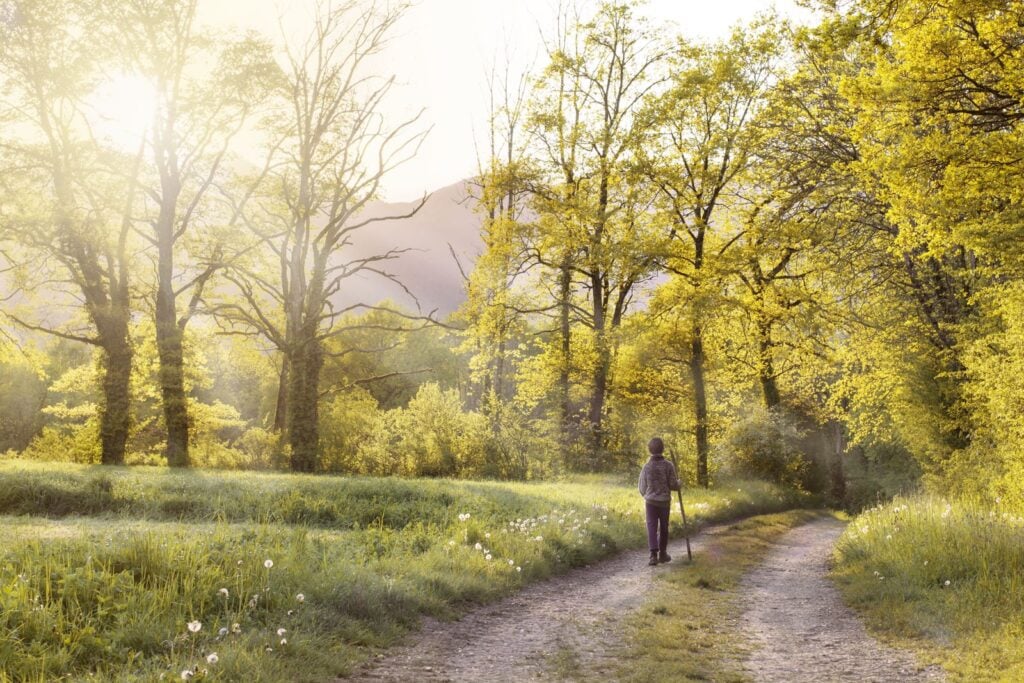
What if I told you that a walk through the woods could lower your stress, boost your immune system, and even sharpen your creativity, all without lifting a single dumbbell? Would you believe me? This isn’t magic. It’s a centuries old practice, and it’s backed up by real science. The practice is forest bathing.
I hike alone a lot. And when I’m out there, I’ll stop for a few minutes during a rest break and just explore my surroundings, with my eyes, my ears, my nose, my hands on the bark of a tree. I do this on the move too, not just when I’m sitting still. It’s not just my muscles that get energized. I come home with this calm, relaxed feeling, a positive mood that sticks with me even though I’m physically tired. I didn’t know there was a name for it, or that it had real, measurable benefits, until I started digging into books and articles and found out this is a real thing. It’s called forest bathing.
Over the past year, every time I came back from a hike, I noticed the same pattern. I felt relaxed, I was in a good mood, like I’d been on vacation for a week, even though I was tired. That got me curious enough to look into it, and what I found is that this is an ancient practice that got a modern name from the Japanese. It’s been studied for decades now.
The practice is called Forest Bathing, or in Japanese, Shinrin Yoku. It has nothing to do with soap or water or swimsuits or fancy gear. It’s simply immersing yourself in nature and taking in everything a forest has to offer through your senses.
The phrase Forest Bathing was coined in the 1980s when Japan’s health agency was looking for a way to combat the stress of urban living. Most ancient cultures had some form of deep nature connection built in already. Japan’s Forest Agency started building this into their wellness programs in the 80s, and they even have an official Director of Forest Medicine. Today plenty of countries are catching on, including the U.S. National Parks with their park therapy programs.
There have been several scientific studies on this, and they’ve found that forest therapy reduces stress, improves mood, boosts mental clarity and working memory, improves attention span, and increases creativity. It also reduces symptoms of depression and anxiety. Some of the studies used blood tests and found lower cortisol levels along with an increase in Natural Killer cells, the cells that attack and destroy cancer cells, and that increase lasted for weeks after the forest bathing session. The studies compared this to a control group who just walked around a city, and that group didn’t get the same benefits.
Practicing this yourself isn’t complicated. Find a good spot, it doesn’t have to be deep in a forest, a park with plenty of trees and few distractions works fine. Turn off your phone and other devices and engage all your senses. Notice the smells, the sunlight coming through the leaves, the birds, the patterns in the bark and the leaves. Just be still and pay attention. Walk around, sit and observe, do it for two hours if you can, but even twenty minutes will do. You’ll notice more in those twenty minutes than you would in a week of city living, and you’ll get the mental and physical benefits along with it.
The science is pretty clear on this one. Forest bathing is a real, verifiable tool for your physical and mental well-being. It’s a good reminder that sometimes the best medicine is a quiet moment in nature. So next time you’re feeling stressed, instead of reaching for your phone, maybe reach for your jacket and head outside.
I’d really like to know if you’ve tried forest bathing, or if you’re planning to. Leave me a comment and tell me what you’re planning, or what you experienced if you’ve already tried it. And don’t forget to come back here for more content about the great outdoors.
Thanks for reading, and we’ll be back soon with more.