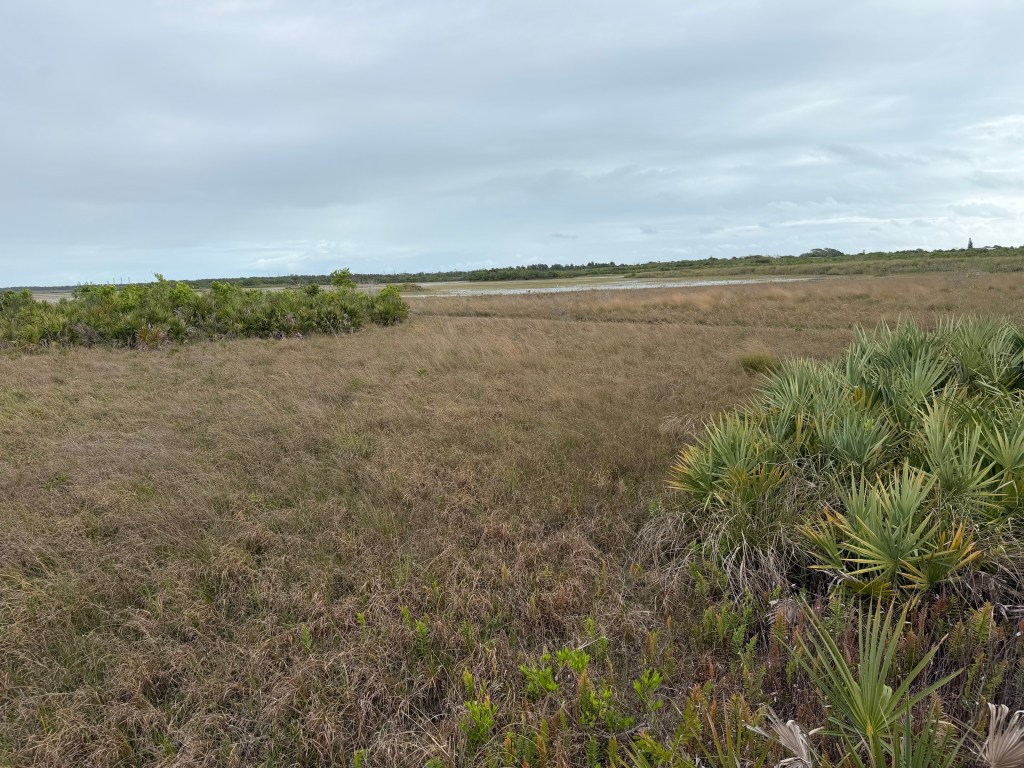
Drive along US-1 between Jensen Beach and Fort Pierce, Florida, and the view from your window tells a familiar story: strip malls, subdivisions, and fast food. Then, almost without warning, the concrete ends and a vast, shimmering wetland opens up on both sides of the road. That’s Savannas Preserve State Park—over 7,000 acres of freshwater marsh, pine flatwoods, and coastal scrub stretching more than 10 miles along the Treasure Coast. It’s the largest intact remnant of a marsh system that once ran the entire length of southeast Florida, and it very nearly didn’t survive.
How did this wild corridor survive decades of explosive population growth? And what comes next? Let’s take a walk through the history, the politics, and the future of one of Florida’s most quietly remarkable parks.
From Pineapple Fields to Protected Marshes: The Early History
Long before the park had a name, the Ais and Jeaga peoples lived along the savannas for thousands of years, leaving shell middens and campsites scattered across the landscape. The freshwater marshes provided abundant fish, waterfowl, and freshwater—a lifeline along an otherwise sandy Atlantic ridge.
The modern story of the land begins in 1879, when Captain Thomas Richards transported pineapple cuttings from Key West and planted them in the sandy, well-drained soil near Jensen Beach. The crop thrived. By 1895, dozens of farms lined the Atlantic Ridge and the area earned the title “Pineapple Capital of the World.” That golden era lasted roughly until 1920, when devastating freezes and competition from Cuban imports pushed growers toward citrus and cattle instead.
The term “savannah” itself was first applied by Lieutenant Colonel Benjamin Pierce during the Second Seminole War (1835–1842), who used it to describe the chain of ponds and marshes running parallel to the coast. That geographic feature—a basin marsh recharged entirely by rainfall—would become the defining characteristic of the preserve we know today.
Acquiring the Land: How Florida Bought a Wilderness
By the mid-20th century, southeast Florida’s population was booming and wetlands were being drained, filled, and paved at an alarming rate. The savannas between Fort Pierce and Jensen Beach were not immune. Schools, hospitals, and subdivisions encroached right to the marsh’s edge.
The first major turning point came in 1972, when Florida designated the North Fork of the St. Lucie River as an Aquatic Preserve, giving its water quality legal protection. Five years later, in 1977, the state made the critical move: it purchased 3,812 acres of marshland for $5.1 million. That single transaction created the core of what would become Savannas Preserve State Park.
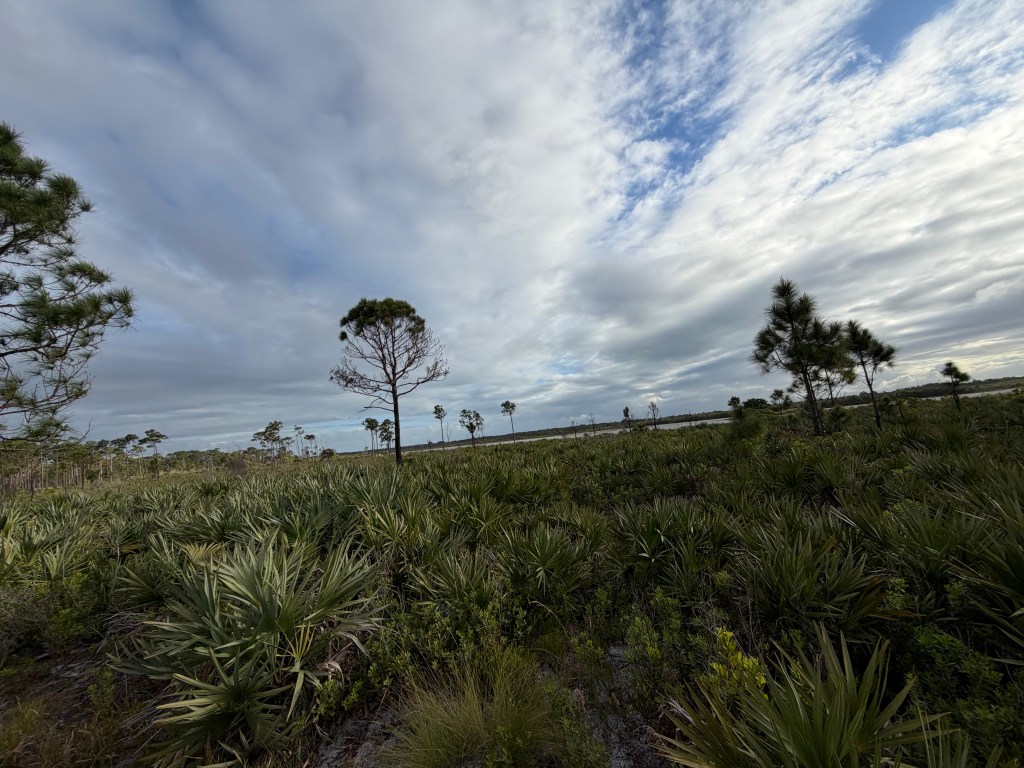
Through the 1980s and 1990s, additional parcels were acquired from private landowners—sometimes willing sellers, sometimes motivated by the realization that development on waterlogged marsh would be costly and impractical. By the time the park officially opened to the public in 1998, the preserve had grown to over 7,000 acres spanning two counties (St. Lucie and Martin) and protecting a mosaic of habitats: basin marsh, pine flatwoods, scrubby flatwoods, wet prairie, and the Atlantic scrub ridge.
Shielded From the Boom: Why Development Didn’t Win
If you’ve spent any time on the Treasure Coast, you know the development pressure is real. St. Lucie County’s population more than doubled between 1990 and 2020, and Martin County saw similar growth. So how did a 10-mile-long strip of wetland stay wild?
Several factors worked in the preserve’s favor. First, the land itself is challenging to build on—it’s a rain-fed basin marsh that floods seasonally, making conventional construction expensive and risky. Second, the 1972 Aquatic Preserve designation and the 1977 state purchase created a legal and financial foundation that deterred speculators. Third, and perhaps most importantly, a dedicated community of residents, environmental groups, and the Friends of Savannas Preserve State Park have kept a watchful eye on the park’s boundaries for decades.
That vigilance was tested dramatically in 2024. In August, Florida’s Department of Environmental Protection quietly released the “Great Outdoors Initiative,” a plan that would have allowed large-scale lodging, golf courses, and even pickleball courts inside multiple state parks—including parks on the Treasure Coast. The backlash was immediate and fierce. Thousands of Floridians wrote letters, attended protests, and shared maps of endangered habitats. Governor DeSantis withdrew the proposal on August 28, 2024.
But the community didn’t stop there. The outcry led to the
The outcry led directly to the Florida State Park Preservation Act (SB 80 / HB 209), a bipartisan bill that passed both chambers of the legislature unanimously. Governor DeSantis signed it into law on May 22, 2025. The act now bans the construction of golf courses, tennis courts, pickleball courts, and ball fields inside state parks and requires 30 days of public notice before any development plan can move forward. It’s the strongest legislative protection Florida’s state parks have ever had.
What Lives Here: A Biodiversity Hotspot in Suburbia
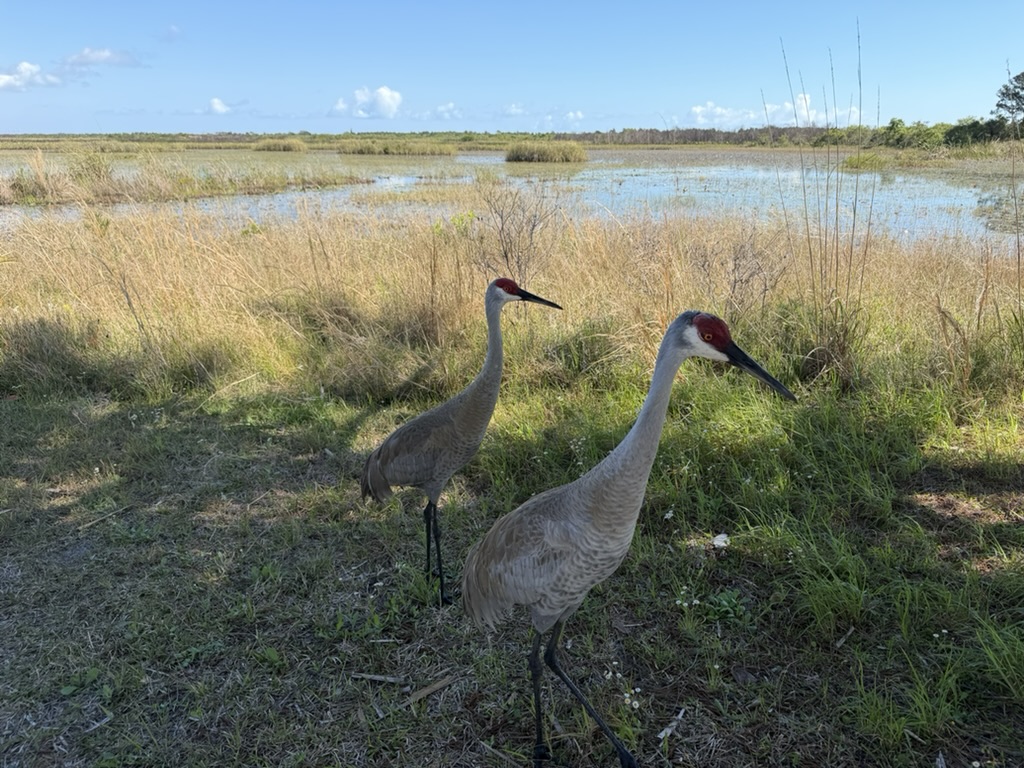
Savannas Preserve isn’t just a buffer between subdivisions—it’s a genuine biodiversity hotspot. The park is home to the threatened Florida scrub-jay and gopher tortoise, American alligators, sandhill cranes, wood storks, roseate spoonbills, and migratory waterfowl. The water levels in the marsh fluctuate with rainfall, creating a dynamic ecosystem that different species rely on at different times of year.
Perhaps most remarkable is the savannas mint, a rare plant that exists nowhere else on Earth. It’s found only within the boundaries of this single park—a fact that underscores just how irreplaceable this landscape truly is.
What’s Next: Future Developments and Improvements
The park is in the middle of several improvement projects right now. The most significant is the SUN Trail—a 4.2-mile paved multi-use path funded by FDOT at an estimated cost of $2.6 million. Originally slated for completion in early 2025, the trail has been delayed by construction challenges but remains a high priority. When finished, it will give cyclists, joggers, and wheelchair users a safe, scenic route through the heart of the preserve.
The Education Center at the Walton Road entrance is also undergoing renovations and is currently closed. Meanwhile, the White Trail (5 miles), Yellow Trail (1 mile), and Blue Trail (2 miles) remain open, along with the Jensen Beach Boulevard day-use area, Hawks Bluff trail, and Evans Creek canoe launch.
Volunteer efforts continue to shape the park’s future. In April 2026, AmeriCorps volunteers are scheduled to remove invasive plants from the sandy hills at Hawks Bluff to improve gopher tortoise habitat. The Friends of Savannas Preserve organization also has fundraising events planned for summer 2026 to support ongoing conservation work.
Why It Matters
Savannas Preserve State Park is proof that conservation isn’t a one-time act—it’s a continuous choice. From the initial $5.1 million purchase in 1977 to the State Park Preservation Act of 2025, every generation has had to decide whether this land is worth protecting. So far, the answer has been yes.
If you’re on the Treasure Coast, go see it for yourself. Walk the White Trail at sunrise, paddle Evans Creek, or just pull off US-1 and watch the sandhill cranes. And if you want to go deeper on this story, a companion video is coming soon on my YouTube channel—watch for a link .
 Outdoors With Barry
Leave a comment